October 2026 | Story: Kaylee Baron Photos: Je’nine May
The University of Cape Town’s (UCT) Development and Alumni Department (DAD) hosted a celebratory evening in honour of students and donors. The evening reminded guests that -‘giving back’- goes far beyond donations.
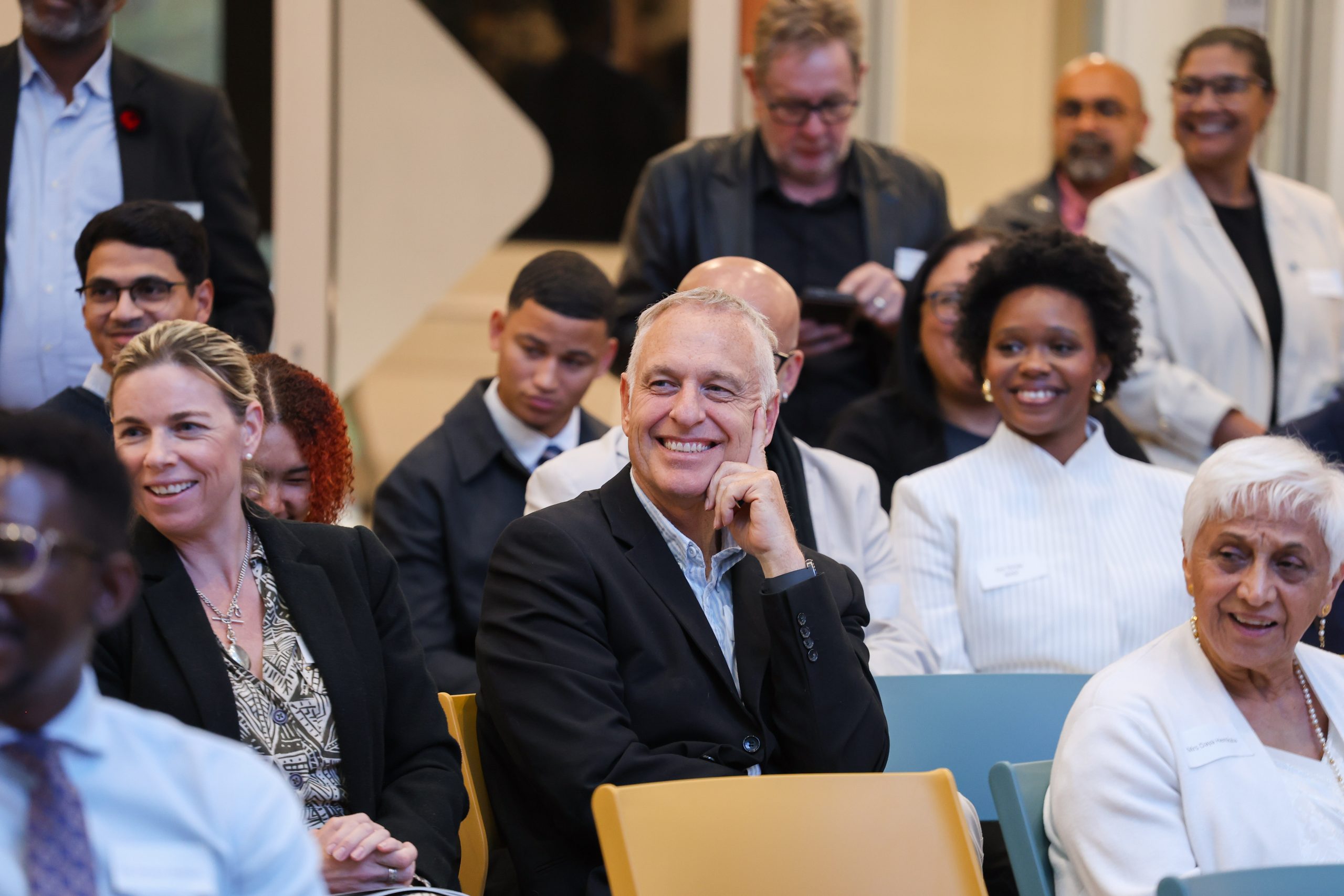
A Student Donor Appreciation evening was held at UCT’s Hasso Plattner School of Design Thinking Afrika (d-school Afrika) on Monday, 19 October 2026, in celebration of both donors and students. A range of speakers addressed the audience that evening. Students shared testimonies about the impact that these donations make and corporate donor Dr Manas Bapela, reflected on the saying, “It takes a village to raise a child.”
Bapela, whose company runs a programme for students, said when he realised that some of those students had no funding, he made it his mission to arrange funding for them. “Let’s not do it for what we can get in return,” he said.
The deputy vice-chancellor for Teaching and Learning, Professor Brandon Collier-Reed, set the tone for the night by welcoming attendees. “It’s not every day that the people who provide support, and the students who receive that support, are able to meet one another,” he said. Professor Collier-Reed stated that the support of donors and corporate funders help create opportunities for students who might otherwise not have been able to complete their studies. “I do not have to tell you that these interventions matter because education is about more than a qualification – it is about possibility.”
Recycling privilege
Dr Vuyane Mhlomi, a UCT alumnus and co-founder of Quro Medicine, said nobody is truly “self-made”. Dr Mhlomi told guests that opportunities were not guaranteed given the circumstances that he grew up in. “As a child, I benefited from a school feeding programme. My family received support from our church and from people in our community.” Dr Mhlomi noted how profound it is that there is ultimately no way of knowing what becomes of the people who receive support.
He urged attendees to think about ‘recycling’ their privilege. “Whenever you find yourself in a position of relative privilege, however it came about, you have an opportunity to use it to make a difference in someone else’s life.”
Unlocking Potential
Two students, Iqra Faki and Maboletso Letsoalo, spoke about the experiences of those who lack funding. Faki, who is completing her honours degree in applied mathematics, spoke about how her undergraduate journey was “far from traditional”. After going through her final year without National Student Financial Aid Scheme (NSFAS) funding and working multiple student jobs to support herself, she received funding from the Nigel and Judith Weiss Educational Trust to complete her degree. “It made me realise that there truly are people in the world who care about a student’s journey, their story, their potential to excel, and their drive for research.”
Maboletso Letsoalo, who is the Vice-President of the Students’ Representatives Council (SRC), told attendees that funding was a constant challenge that the SRC encountered. “For many students, accessing university is only the first hurdle. Staying here, registering each year, affording accommodation in Cape Town, buying food, and ultimately completing a qualification can be an entirely different struggle,” she said.
She noted that donations are one of the ways to bridge the gap between a student’s potential and the circumstances that threaten it. Letsoalo stated that these donations make it possible for students to register, have a roof over their head, and food to eat while they study.
Dr Manas Bapela, corporate donor and CEO of Argon Asset Management, reflected on the saying, “it takes a village to raise a child.” Dr Bapela, whose company has a program for students, remarked that he had realised that some of those students had no funding. He then made it his mission to arrange funding for them. “It takes a village to raise a child. Let’s not do it for what we can get in return,” he said.
The Chief Financial Officer (CFO) at UCT, Mr Vincent Motholo, told attendees that government funding is very limited. With the introduction of NSFAS’ accommodation cap, other funders have followed suit. Mr Motholo emphasised that we need individuals and the private sector. He thanked the donors who were in attendance for their partnership with UCT and asked that they continue their contribution. “We ask you to remain partners with us in the longer term so that we can tackle this issue because we cannot do it with government alone.”